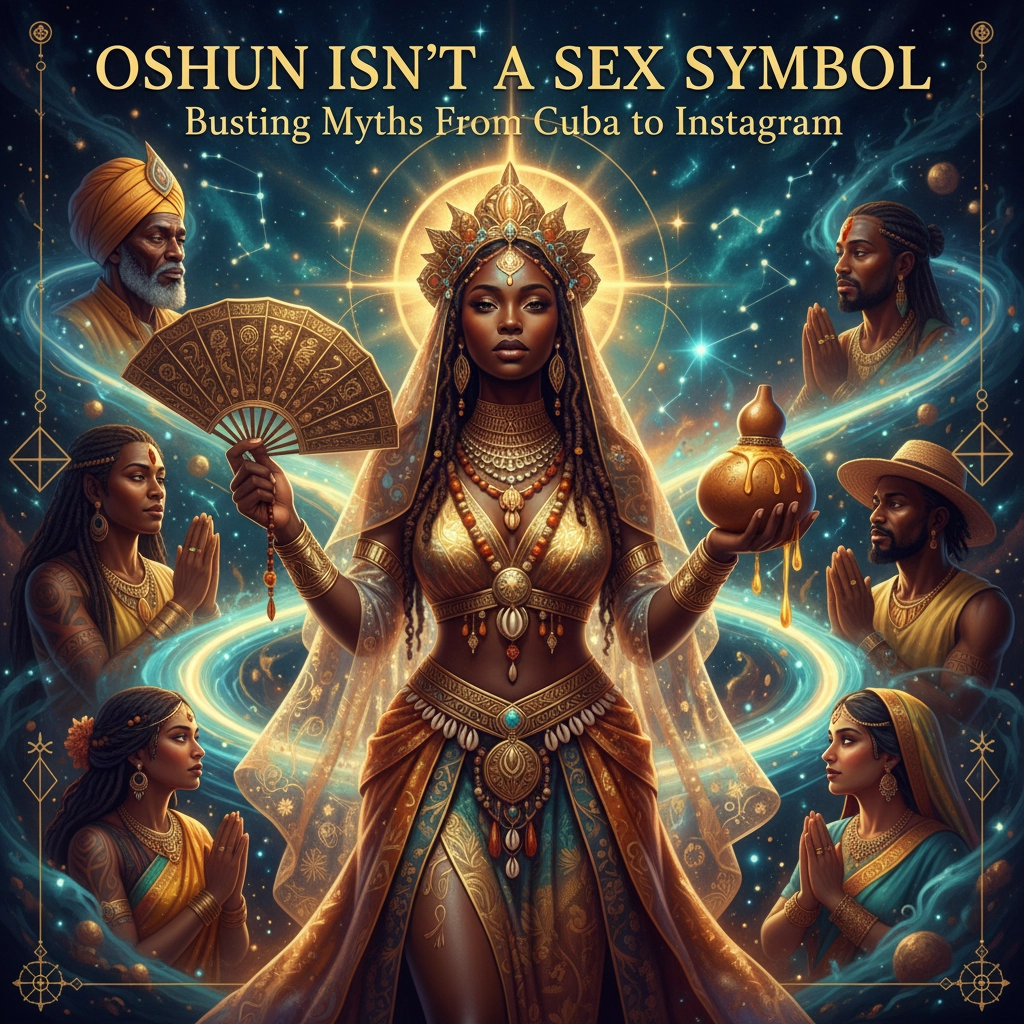
Oshun Isn't a Sex Symbol: Busting Myths From Cuba to Instagram
Scroll through spiritual TikTok or Instagram for five minutes, and you'll encounter a troubling pattern: Oshun reduced to sensual dancing, peacock feathers, and tales that sound more like nightclub mythology than sacred tradition. Somewhere between the trauma of the Middle Passage and the algorithm of social media, one of Yorubaland's most profound deities became a caricature of herself.
This isn't just cultural appropriation: it's cultural amnesia. And it's time we remember who Oshun really is.
The Cuban Connection: When Survival Became Scripture
The distortion didn't begin on Instagram. It started centuries ago in the sugar plantations of Cuba, where enslaved Yoruba people disguised their orishas as Catholic saints to preserve their spiritual practices. This syncretism was genius: and necessary for survival. But over generations, these survival adaptations became treated as original teachings.
In Cuban Santería, Oshun merged with Our Lady of Charity, picking up Catholic associations that never existed in traditional Yoruba practice. Stories emerged connecting her to biblical figures, creating elaborate mythologies that sound impressive but lack any foundation in source traditions. These diaspora innovations aren't inherently wrong: they represent the creativity and resilience of displaced peoples. But when social media influencers present them as ancient Yoruba wisdom, we have a problem.

The "cabaret Oshun" is perhaps the most damaging myth. In some diasporic communities, particularly those shaped by colonial trauma, Oshun became associated with sex work, nightlife, and what one popular Cuban influencer calls her "304 paths": modern slang that reduces the river goddess to contemporary stereotypes about women's sexuality.
This isn't Oshun. This is colonialism wearing golden bangles.
What Instagram Gets Wrong: Symbols Without Substance
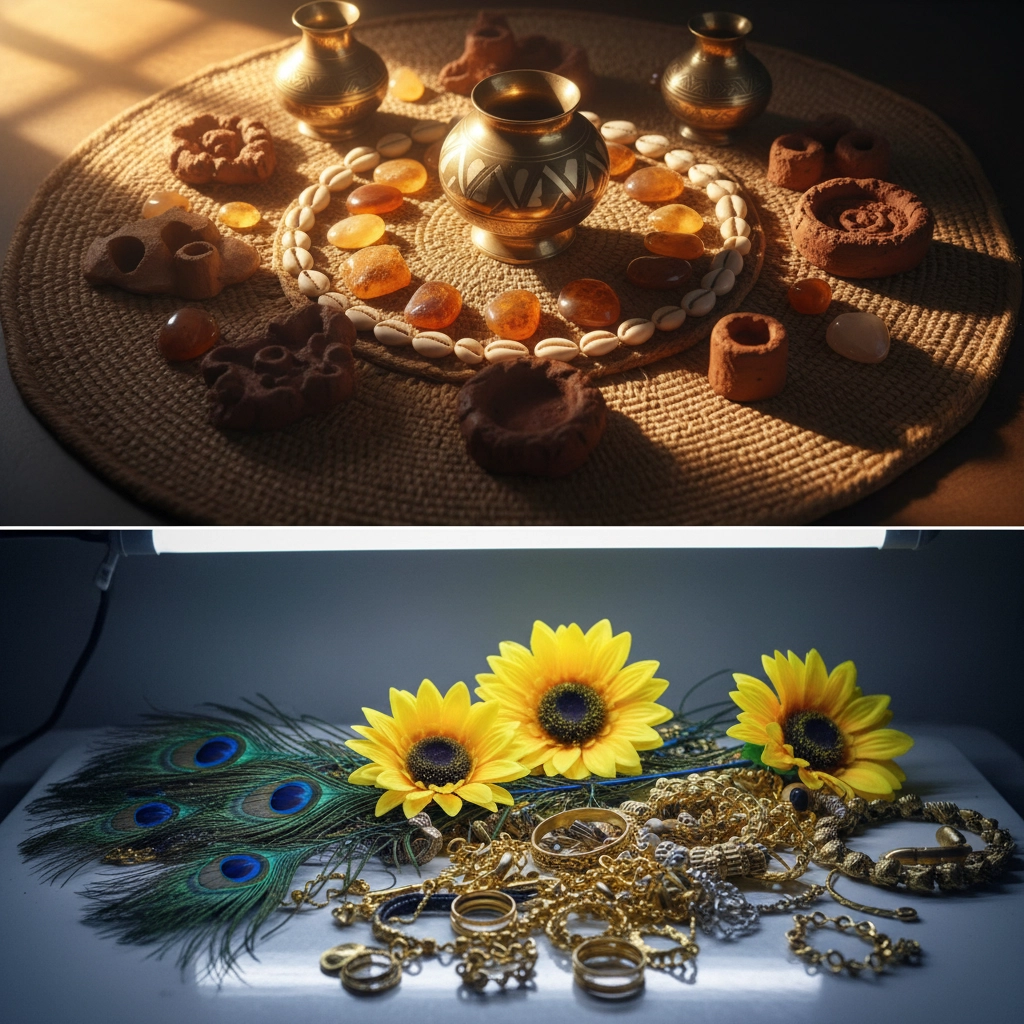
Open any spiritual influencer's page dedicated to Oshun, and you'll see the same recycled imagery: peacock feathers, sunflowers, mermaid tails. These symbols feel ancient and mystical, which makes them perfect for content creation. The problem? They're modern inventions.
Traditional Yoruba iconography for Oshun centers on brass, honey, amber, and river symbols: not peacocks or sunflowers. The mermaid association, while beautiful, comes from later syncretic traditions where water spirits from different cultures blended together. These symbols aren't "wrong," but presenting them as traditional Yoruba practice misleads people about the actual source culture.
The peacock, in particular, has become so associated with Oshun on social media that many practitioners believe it's traditional. Yet peacocks aren't native to West Africa and don't appear in classical Odu Ifa stories about Oshun. This is the danger of aesthetics-driven spirituality: symbols chosen for their visual impact rather than their cultural authenticity.
The Real Oshun: River of Life, Not Fantasy
Who is Oshun in traditional Yoruba cosmology? She is Yeye: the mother whose waters make life possible. She rules fertility, abundance, healing, and the diplomatic arts that keep communities together. In the foundational stories, she is the only female among the original orishas sent to create the world, and when the male orishas attempt creation without her wisdom, they fail catastrophically.
Oshun's sensuality is real and sacred: but it's the sensuality of life force itself, not the manufactured sexuality of colonial trauma narratives. Her seductive power lies in her absolute confidence in her worth, her knowledge of her divine nature, and her ability to call abundance into being. This is why honey is her sacred offering: sweetness that attracts without force, nourishment that sustains life.
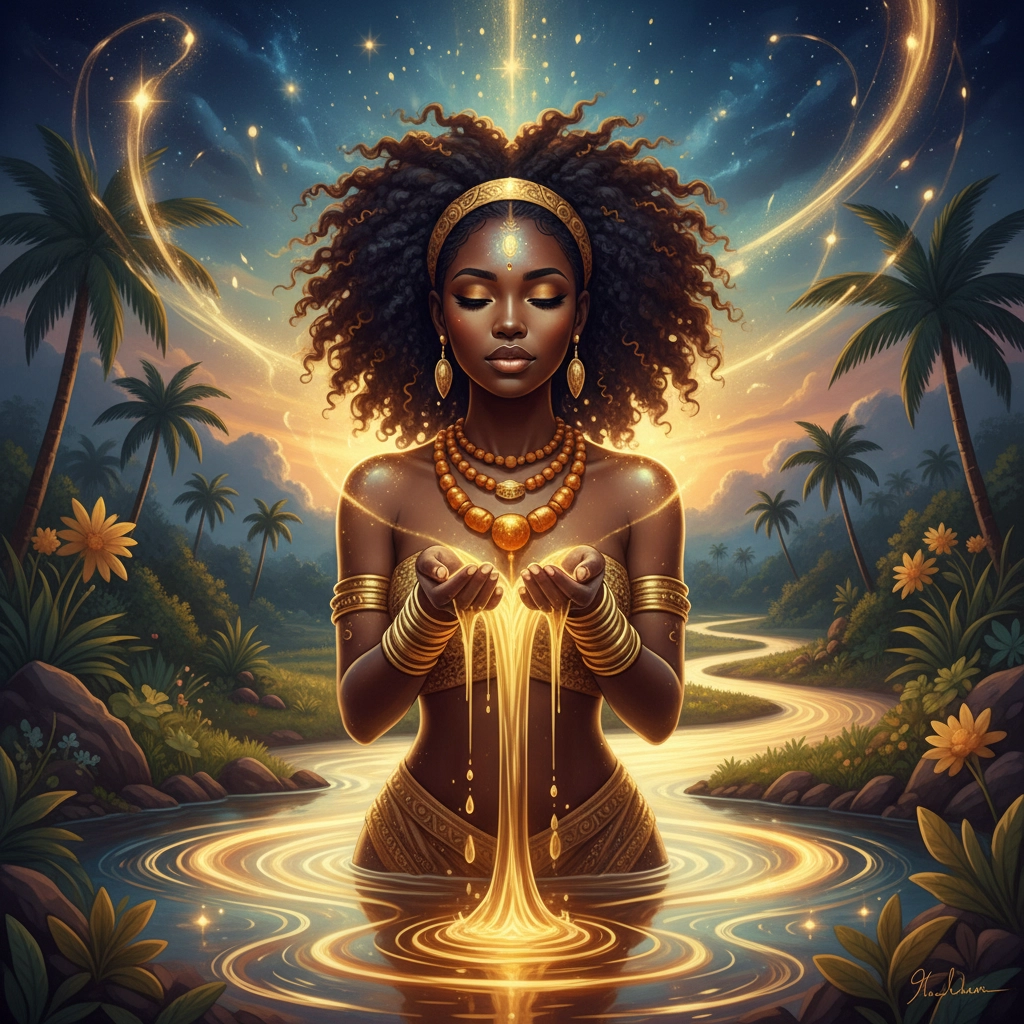
In traditional practice, Oshun teaches the balance between receptivity and sovereignty. She shows how feminine power operates through invitation rather than domination, through wisdom rather than manipulation. This sophisticated understanding gets completely lost when she's reduced to a "sugar baby" archetype or a celestial sex symbol.
The Algorithm's Appetite: Why Misinformation Spreads
Social media rewards engagement over accuracy, and nothing drives engagement quite like spiritual content that combines ancient wisdom with modern appeal. Influencers know that posting about "Oshun's seduction secrets" will get more views than discussing her role in traditional Yoruba governance structures.
The algorithm doesn't care about cultural integrity: it cares about watch time and shares. This creates a perverse incentive structure where the most authentic teachers often have the smallest platforms, while those willing to sensationalize sacred traditions rack up millions of views.
The tragedy is that many people genuinely seeking spiritual connection encounter these distorted versions first. By the time they discover traditional teachings, they've already internalized layers of misinformation that can take years to unlearn.
Beyond the Stereotype: Reclaiming Sacred Truth
Understanding Oshun authentically requires understanding the Yoruba worldview that created her veneration. In traditional Isese practice, orishas aren't distant deities to be worshipped from afar: they're forces of nature, psychological principles, and community guides all at once. Oshun represents the principle that abundance flows to those who maintain their dignity and recognize their inherent worth.
This is radically different from the "manifest your sugar daddy" content that dominates spiritual social media. Traditional Oshun teaches that genuine abundance comes through developing your gifts, maintaining healthy boundaries, and creating value in your community. She's about sustainable prosperity, not quick fixes.
Her connection to beauty isn't vanity: it's the understanding that taking care of yourself and your environment is a spiritual practice. Her association with gold isn't materialism: it's recognition that you deserve to be valued and compensated fairly for your contributions.
The Path Forward: Responsible Spiritual Inquiry
How do we navigate the difference between authentic tradition and creative innovation without becoming spiritual purists who reject all cultural evolution? The key is transparency and respect.
If you're drawn to work with Oshun, start by learning about traditional Yoruba culture. Read academic sources, not just spiritual blogs. Understand the historical context of different practices. When someone claims to teach "ancient secrets," ask for sources. Real tradition can provide lineage and context for its teachings.
This doesn't mean diaspora innovations are invalid: many beautiful and powerful practices emerged from the creative resilience of displaced peoples. But these should be honored as innovations, not presented as original traditions. The Cuban path is not the Nigerian path, and both have value when approached with honesty about their origins.
At Ejiogbe Institute, we emphasize the importance of approaching spiritual traditions with both openness and discernment. True spiritual power comes from understanding the deep principles behind practices, not from collecting surface-level symbols.
Restoring the River: Oshun's True Legacy
Oshun deserves better than to be reduced to a social media archetype. She is the river that sustains life, the diplomatic wisdom that prevents wars, the creative force that turns vision into reality. She is the teacher who shows that true power comes from knowing your worth and refusing to accept less than you deserve.
When we restore Oshun's authentic image, we restore something essential about how we understand feminine power, abundance, and the sacred nature of life itself. This isn't just about correcting spiritual misinformation: it's about reclaiming wholeness in a world that profits from our fragmentation.
The next time you encounter content about Oshun, ask yourself: Does this honor the depth and complexity of a deity who has sustained communities for over a millennium? Or does it reduce sacred mystery to viral content?
Your spiritual integrity depends on the difference.