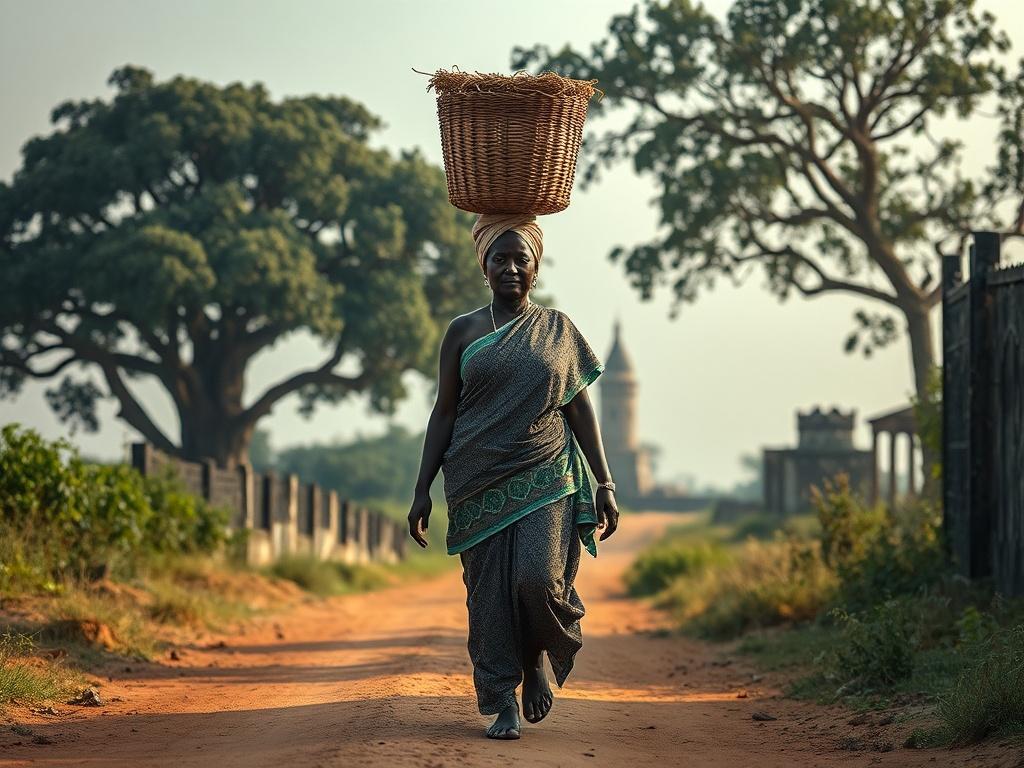
There are places on this earth where the veil between past and present grows thin, where the very soil holds memories too heavy for ordinary consciousness to bear. Badagry is such a place: a coastal town in Nigeria where for over 400 years, the drumbeat of human commerce echoed across lagoons and through the hearts of those who would never see home again.
Walking the Badagry slave route today isn't tourism. It's pilgrimage. It's a confrontation with the ancestral wounds that still pulse through our collective unconscious, and a reclamation of stories that were meant to be forgotten.
The Weight of Remembrance
When you step onto the weathered stones of Badagry's slave route, you're walking on ground hallowed by suffering. This 4-kilometer pathway from the holding barracoons to the Point of No Return carried an estimated 20 million souls toward ships that would transport them into centuries of bondage. But numbers, however staggering, cannot capture the texture of what happened here.
The Brazilian Baracoon still stands: its thick walls and narrow windows a testament to humanity's capacity for both cruelty and endurance. Built by Seriki Williams Abass, himself a formerly enslaved person who became a slave trader, this structure embodies the complex web of complicity that sustained the trade. Here, in rooms barely large enough for twenty people, hundreds were crowded together for weeks, sometimes months, waiting for ships that would sever them from everything they knew.
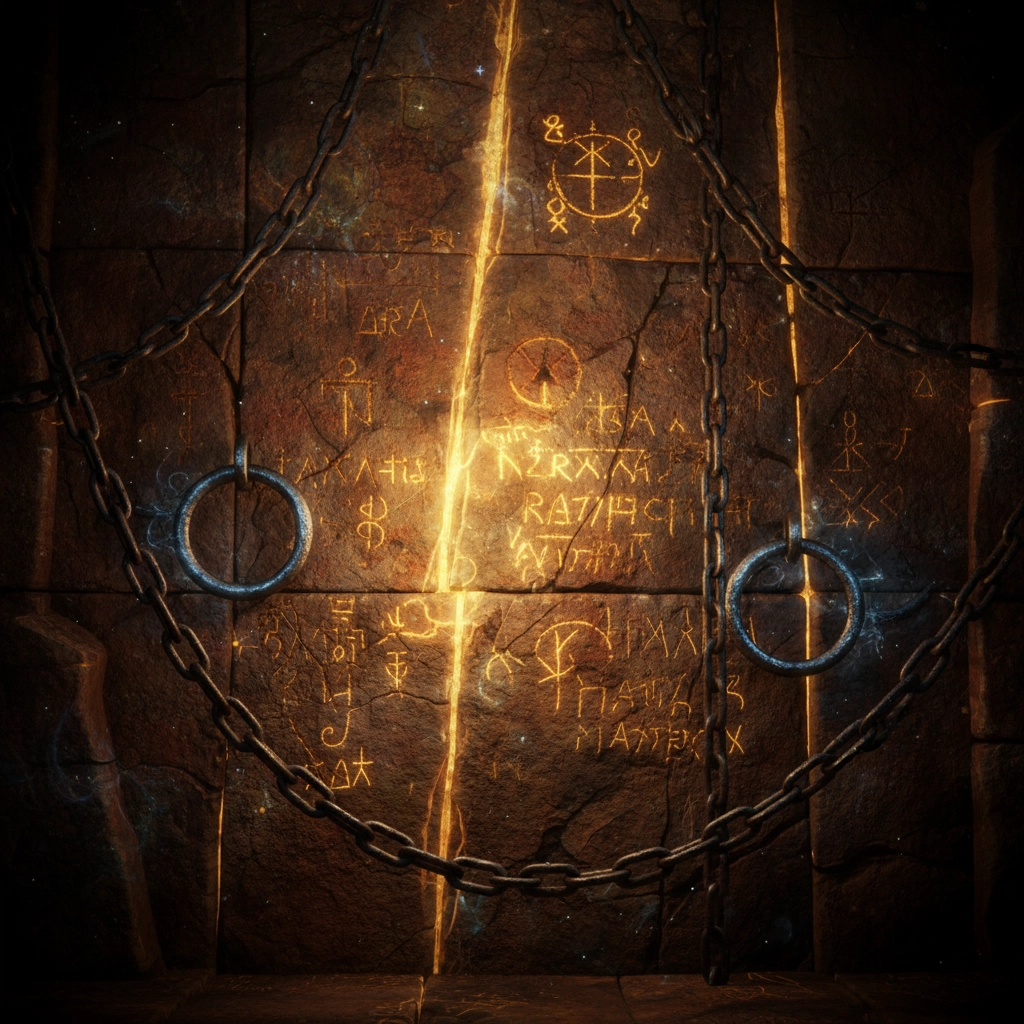
You can still see the chains embedded in the walls, the iron rings where human beings were shackled like cargo. But what strikes most visitors isn't the brutality: it's the humanity that somehow persisted within it. Scratched into stone walls are symbols, prayers, messages left by those who understood they were living their final moments as free people.
Sacred Objects, Stolen Lives
In the oral histories preserved by local griots and museum guides, we encounter objects that carry profound spiritual weight. Consider the umbrella: not merely a protection from sun or rain, but a currency of souls. Local accounts speak of European traders offering a single umbrella in exchange for forty human lives. Forty families destroyed, forty lineages severed, forty ancestral threads cut: all for an object that would last perhaps a few rainy seasons.
The coconut shells displayed in the heritage museum tell another story entirely. Carved by enslaved hands during their final weeks in the barracoons, these shells became vessels for last messages, final prayers, desperate attempts to maintain connection with the spiritual world they were being forced to abandon. The intricate patterns weren't decoration: they were communication, a coded language that allowed captives to share information, offer comfort, and preserve fragments of their cultural identity.

These objects remind us that even in the face of absolute dehumanization, the human spirit finds ways to assert its dignity, to create meaning, to resist erasure.
The Ritual of Forgetting
Perhaps no element of the Badagry experience disturbs modern visitors more than the "forgetting well" at Gberefu Island. Here, those about to be loaded onto slave ships were forced to drink water from a well that, according to local belief, would cause them to forget their homeland, their families, their very identity.
This wasn't merely psychological warfare: it was spiritual assault. The traders understood something that modern psychology is only beginning to grasp: that identity is rooted in memory, and memory is rooted in place. By forcing captives to participate in a ritual of forgetting, they were attempting to complete the work of enslavement not just of the body, but of the soul.
Yet the well also reveals something profound about the resilience of ancestral memory. Despite centuries of attempts at erasure, the stories survived. The traditions endured. The spiritual technologies that sustained our ancestors found ways to transmit themselves across oceans and through generations of trauma.
The Point of No Return
At the edge of Gberefu Island, where the Atlantic meets the African coast, stands a monument that serves as both warning and invitation. The Point of No Return marks the precise location where thousands of Africans took their last steps on native soil. The name itself: chosen by those who lived through this history: captures the absolute finality of what occurred here.
Standing at this edge, many visitors report experiences that transcend ordinary historical awareness. Some feel the presence of ancestral spirits. Others are overwhelmed by grief that seems to arise from somewhere deeper than personal experience. Still others describe a profound sense of coming home to a wound they never knew they carried.

This isn't coincidence or imagination. Emerging research in epigenetics suggests that trauma can be transmitted across generations through altered gene expression. The grief you feel at the Point of No Return may not be your own: it may be ancestral memory surfacing into consciousness, demanding acknowledgment, recognition, and healing.
Complicity and Complexity
One of the most difficult aspects of walking the Badagry route is confronting the full complexity of how the slave trade functioned. This wasn't simply a matter of European raiders capturing innocent Africans. Local chiefs, traders, and entire communities became enmeshed in networks of complicity that are difficult to process through simple narratives of good and evil.
The figure of Seriki Williams Abass embodies this complexity. Captured and enslaved as a young man, he eventually gained his freedom and returned to Africa: only to become one of the most successful slave traders of his era. His story forces us to grapple with how systems of oppression can corrupt even their victims, how survival sometimes requires participation in the very structures that have harmed us.
This isn't a comfortable truth, but it's a necessary one. Real healing requires us to see the full picture, to understand how trauma creates cycles of harm that extend far beyond the original injury.
Decolonial Healing and Ancestral Restoration
Walking the Badagry route offers more than historical education: it provides a framework for understanding how ancestral trauma continues to shape contemporary experience. Many visitors find that symptoms they've carried for years: chronic anxiety, depression, patterns of self-sabotage, difficulty maintaining relationships: begin to make sense when viewed through the lens of inherited trauma.
This isn't about blame or victimhood. It's about recognition and restoration. When we acknowledge the wounds our ancestors carried, when we honor their experiences and create space for their stories, we begin to interrupt the transmission of trauma and create possibilities for healing.

The traditional healing practices preserved in places like Badagry offer profound resources for this work. The use of sacred wells, not for forgetting but for remembering. Ritual objects that restore connection rather than severing it. Community ceremonies that reweave the social fabric torn by historical violence.
Integration and Moving Forward
The lessons of Badagry extend far beyond the specific history of the Atlantic slave trade. They speak to anyone whose lineage carries the wounds of displacement, colonization, cultural erasure, or systematic dehumanization. They offer guidance for those seeking to understand how historical trauma lives in the body, how it shapes behavior across generations, and how healing becomes possible when we're willing to face truth with courage and compassion.
For practitioners of traditional African spirituality, the Badagry route serves as both cautionary tale and reclamation. It reminds us that our ancestors maintained their spiritual connections even under conditions of absolute extremity. It challenges us to carry forward their wisdom with the same fierce determination they showed in preserving it through centuries of attempted destruction.
The Ongoing Journey
Your own ancestral healing journey may not lead you physically to Badagry, but the principles it embodies remain universally applicable. Begin by creating space to listen to the stories your lineage carries. Notice where trauma manifests in your body, your relationships, your patterns of thinking and feeling. Seek out healing modalities that honor both the reality of injury and the possibility of restoration.
Remember that healing ancestral trauma isn't just personal work: it's service to future generations. When you interrupt the transmission of inherited wounds, you're not only freeing yourself but ensuring that your descendants inherit something different, something life-giving rather than life-limiting.

The path that leads through places like Badagry ultimately leads toward wholeness. Not the false wholeness that denies difficulty, but the mature wholeness that integrates shadow with light, wound with wisdom, memory with hope. This is the gift our ancestors offer us across the centuries: the knowledge that no matter how dark the circumstances, the human spirit finds ways to survive, to preserve what matters most, and to transmit the seeds of healing to those who come after.
In walking their path, we honor their sacrifice. In healing their wounds, we complete their work. In telling their stories, we ensure they are never truly forgotten.